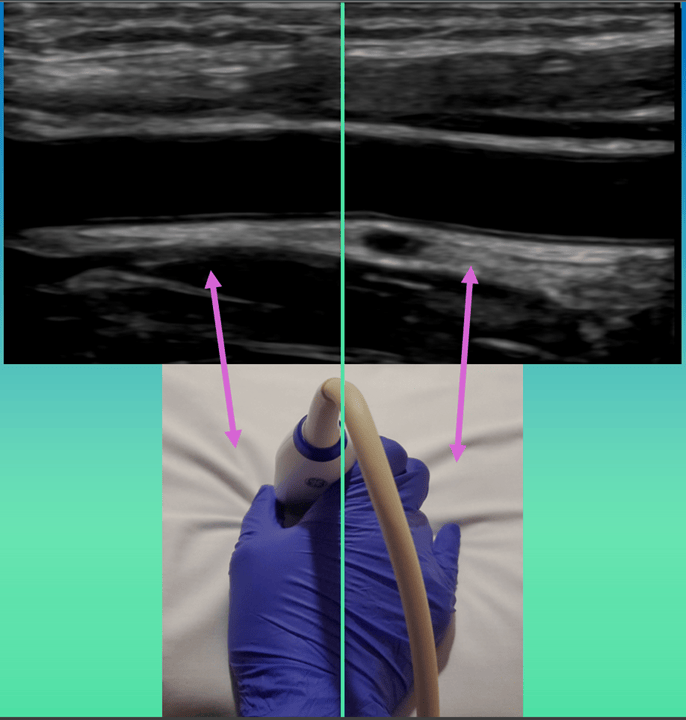

Ultrasound Basics
This video guides you through core ultrasound concepts, basic physics foundations, and how the machine and image acquisition function in real-time.
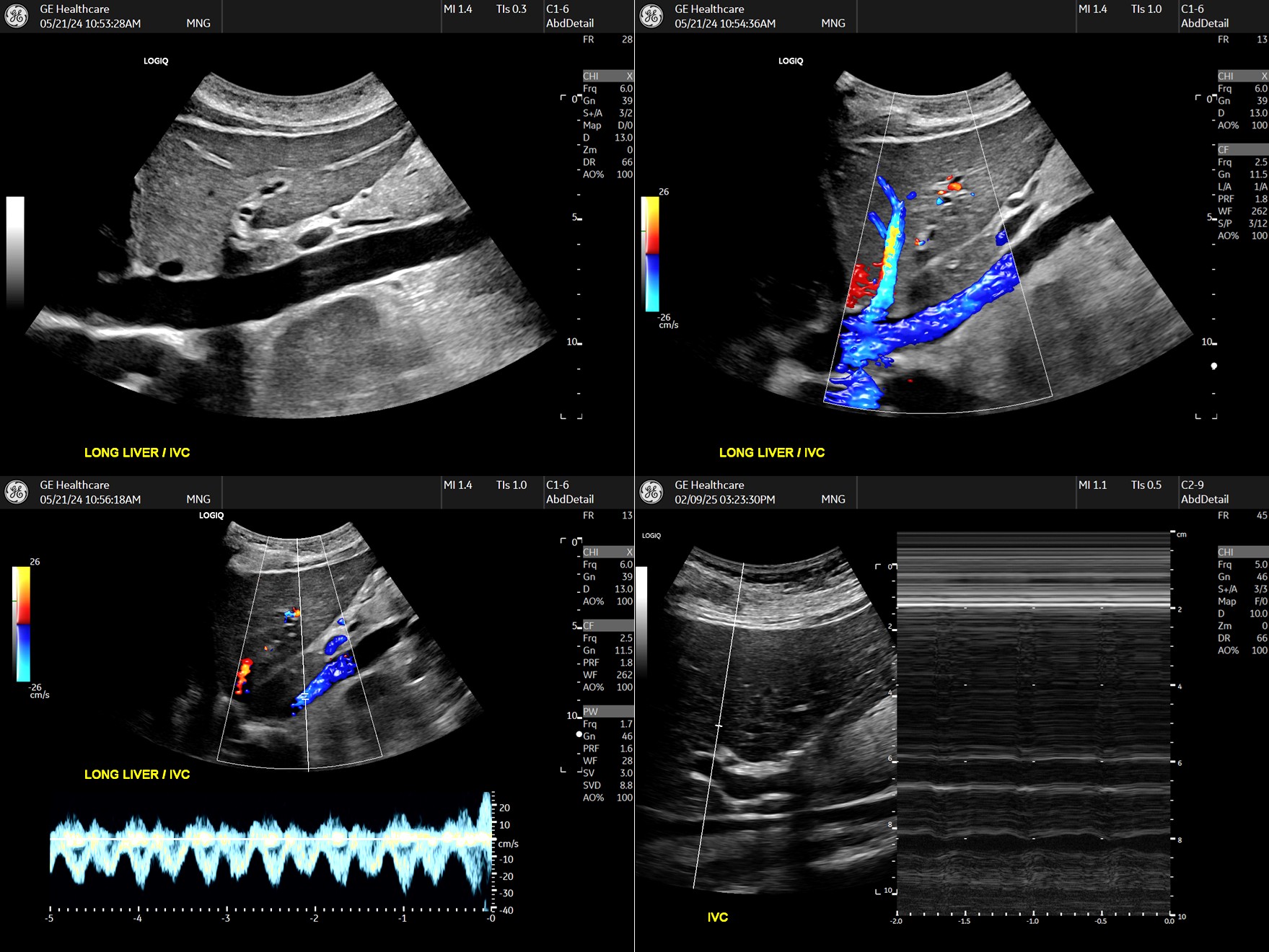
Scanning Modes
We scan in four basic modes, mostly three of the four:
- B-mode (brightness mode, B, grayscale)
- Color flow (CF)
- Spectral (pulsed wave, PW)
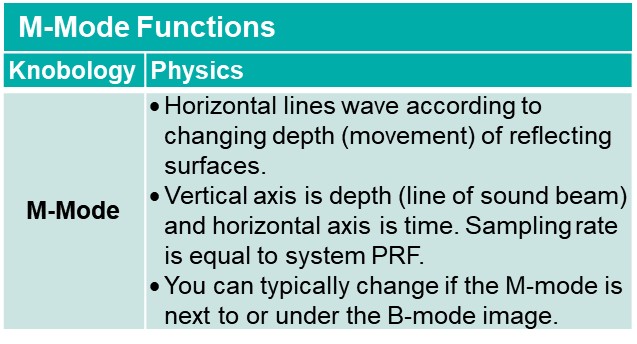
- M-mode (motion mode)
We can take cine clips (cinematography: series of ultrasound frames captured over time).
B-mode is our basic scanning mode in which we do the majority of our scanning. Even color flow has B-mode in the background.
Color Flow and Spectral are Doppler technologies that tell us the velocity of moving red blood cells.
We can also glean other flow characteristics from Color Flow and Spectral including laminar versus turbulent flow, phasicity, pulsatility, spontaneity, reflux, and ability to augment.
M-mode is used in echocardiography including obtaining fetal heartrate in obstetrics scanning.
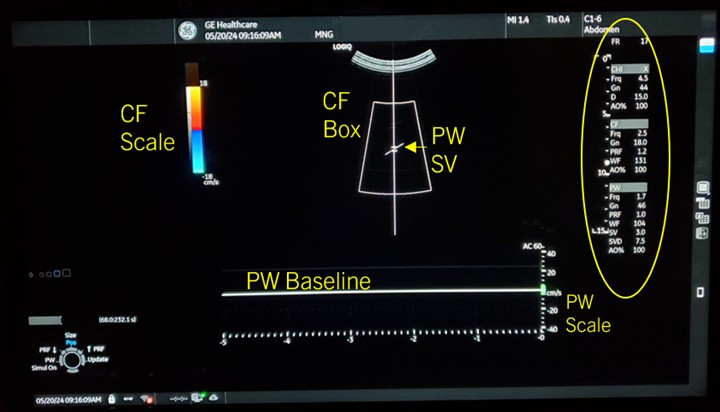
Screen Layout
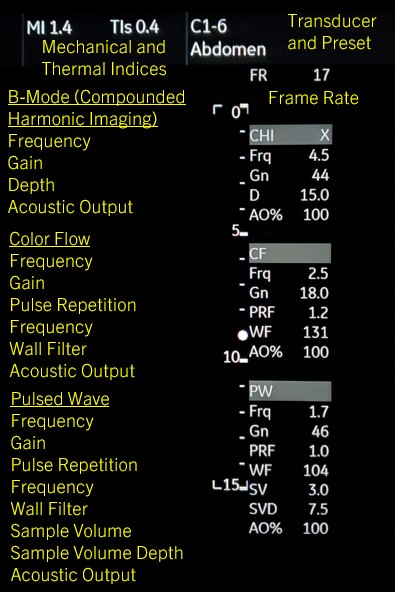
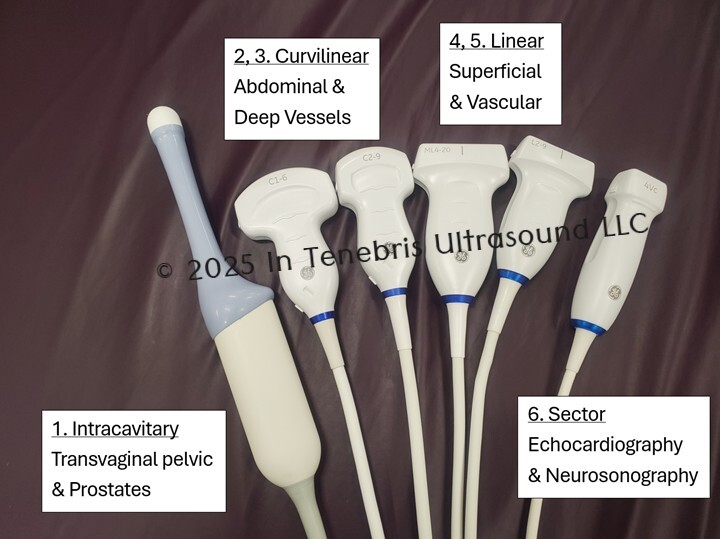
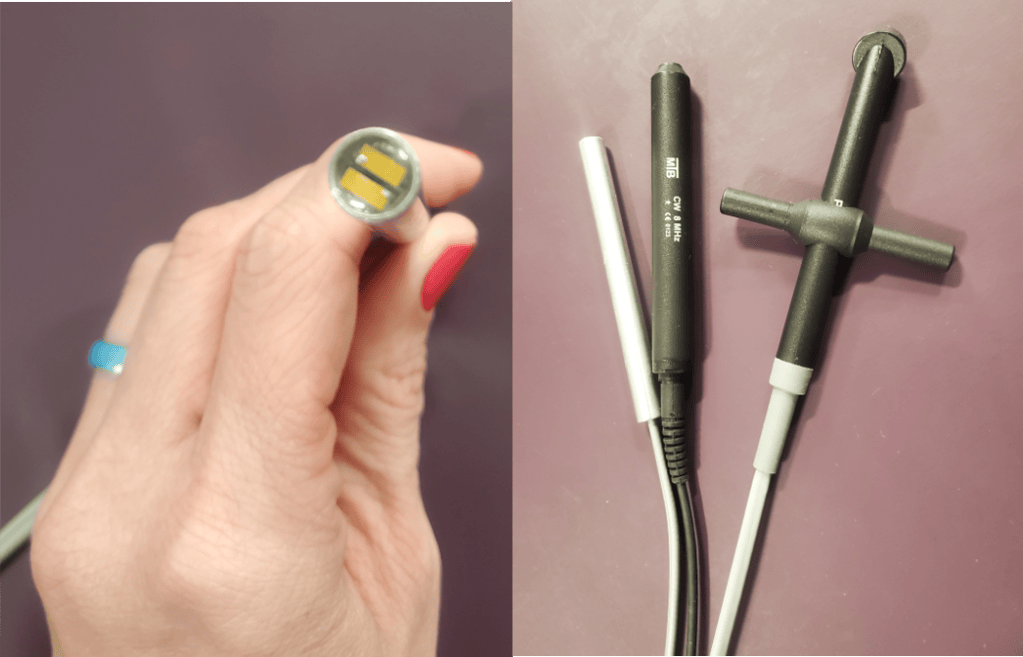
Using the Probes
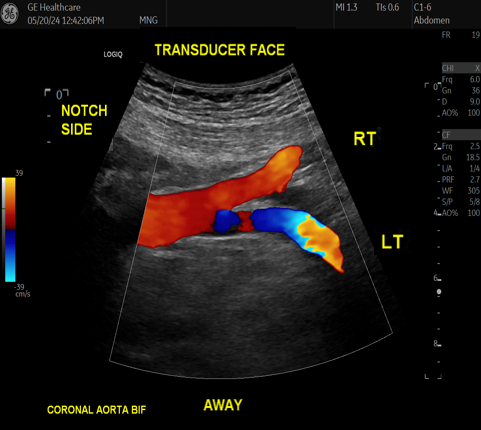
The AIUM publishes the Standard Presentation and Labeling of Ultrasound Images (2020). This is a helpful document for beginners to learn orientation of the imaging.
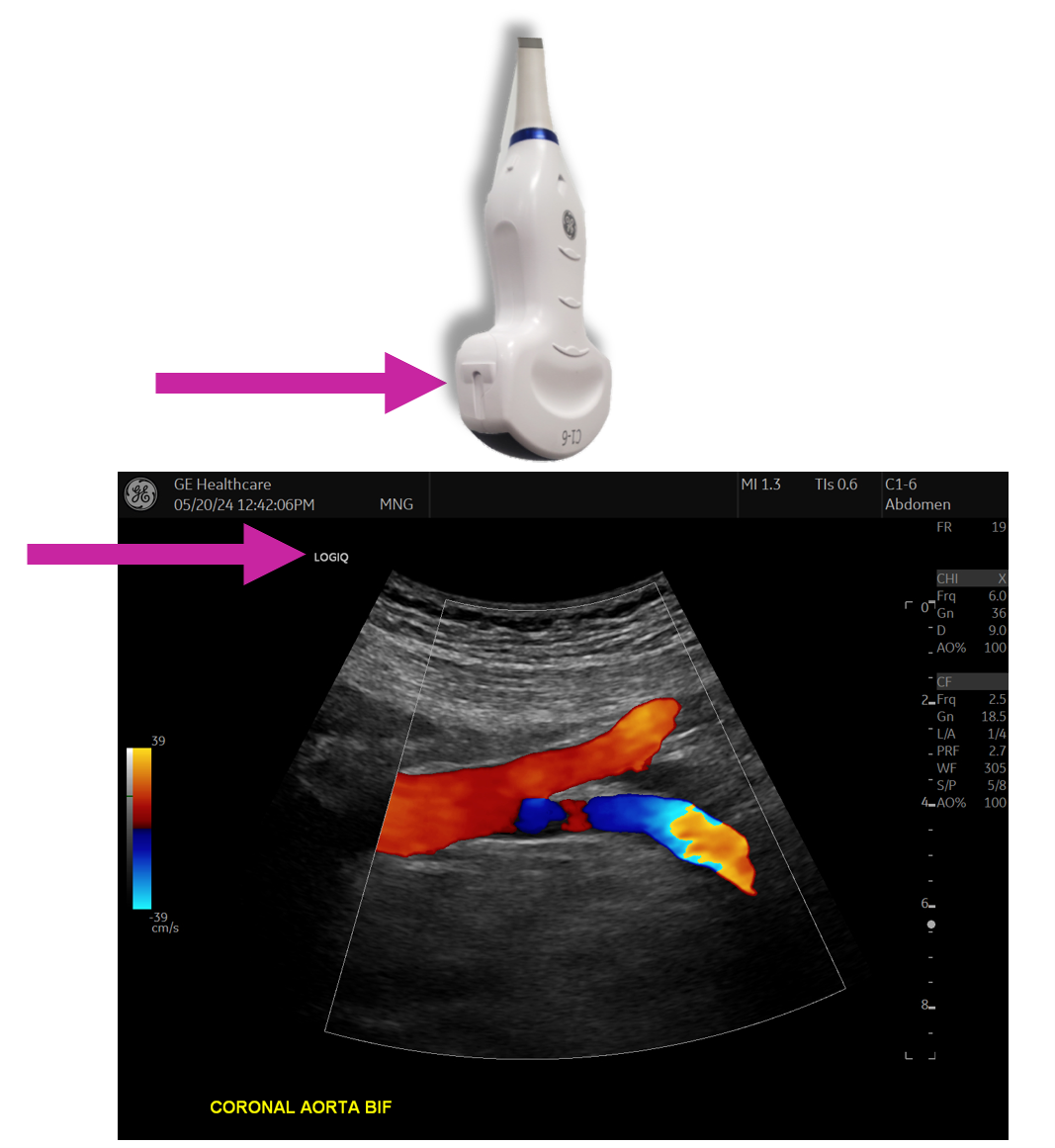
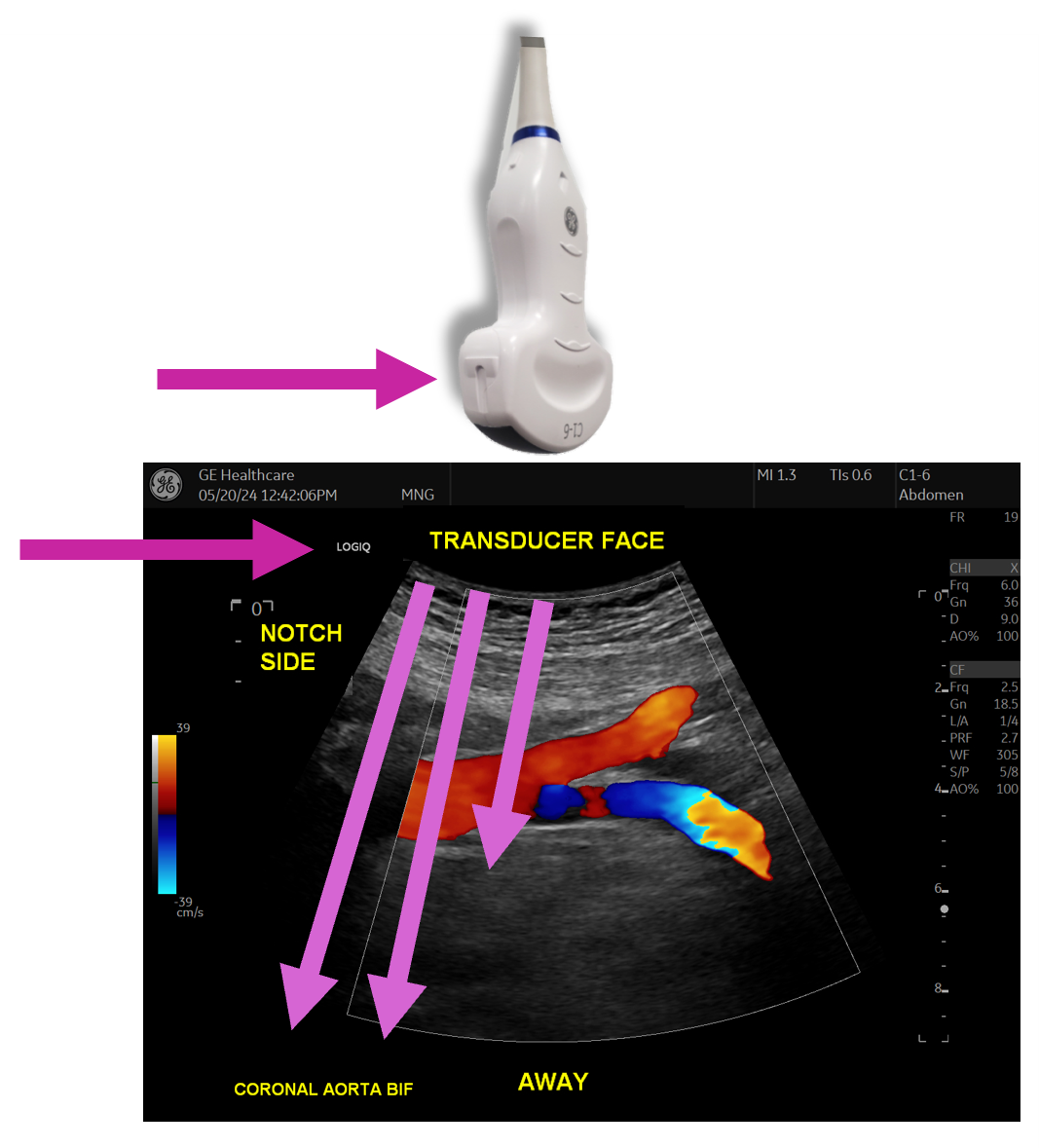
The top of the image corresponds to the start of the sound beam at the transducer face, whereas the bottom of the image is deeper and away.
The left part of the image (where the logo of the machine company is) corresponds with the notch on the transducer, and then the right side is the opposite side.
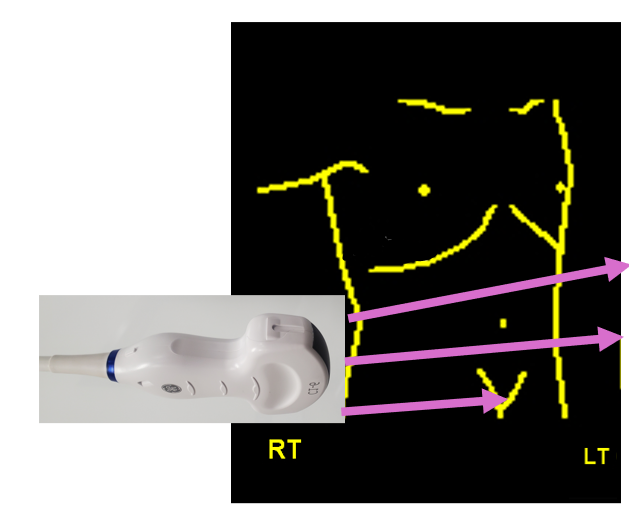
As you scan, think of where the transducer face and notch are on the patient and picture the sound beam like a flashlight going into the patient’s body.
You can imagine the image being drawn from near to far and from notch-side to the opposite side. This can help you understand the relationship of anatomical structures as you learn to scan.
Holding the Probe
- Do not death-grip the probe!
- Pressure comes from down the arm, not at the wrist.
- Loose, relaxed, and flexible wrist.
- Small (micro-) movements should be able to be performed with your thumb and ring finger.
- Rest your hand on patient (forearm if possible, too).
- Pinky on patient to anchor (Pinkies out! We have manners).
- You should be able to allow someone else to hold your hand and guide you.
- You should also be able to anchor on your patient with your hand and not allow someone to knock you off your spot.
- Follow proper ergonomics while learning how to scan—do not form bad habits.
- Growing pains are common as muscles are being used differently—please follow medical advice from your personal healthcare professional regarding bracing (kinesiology tape), icing, heating, stretching, massages, resting, etc
Hand on the Console: Freeze+Print
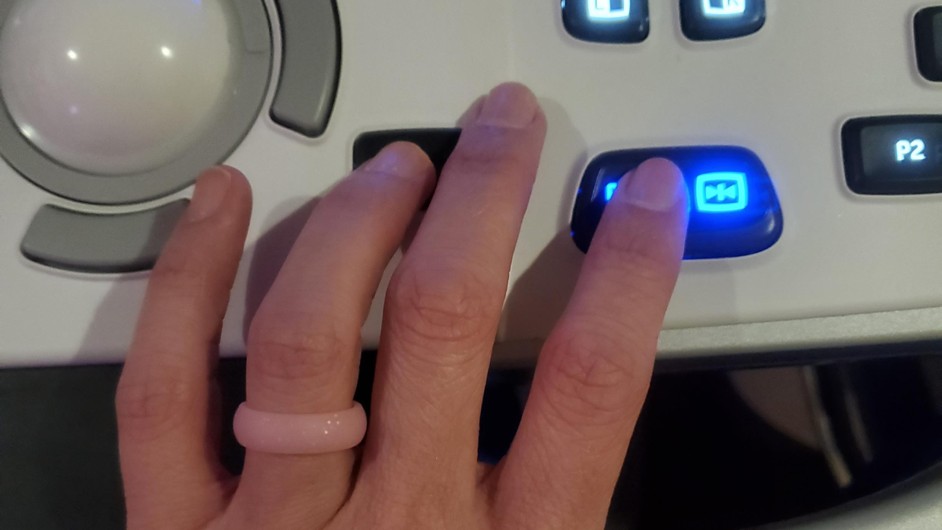
Place your fingers on Freeze and Print to train the quick freeze+print combination. The quicker you take your image, the less time your protocol will take.
Scanning Maneuvers
There are a multitude of scanning maneuvers–these are illustrated in the book!
One maneuver students, sonographers, and I myself are keen to be reminded of on the daily is Tilt the Top! This movement scans through the ELEVATIONAL PLANE.
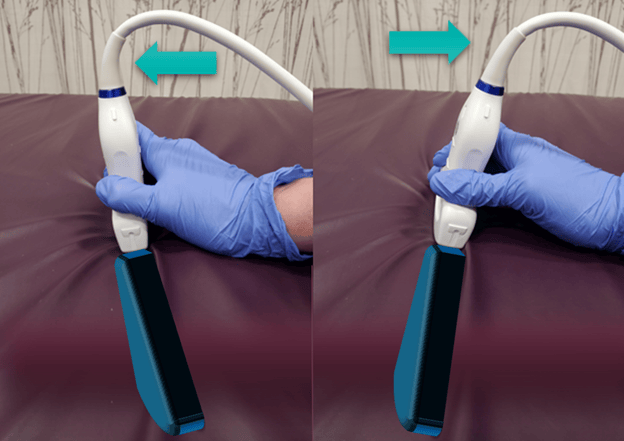
Learning to Scan takes Practice!
- Ultrasound is all about hand-eye coordination.
- Remember everything on our screens is magnified.
- If you are struggling to find or lengthen out an area, once acquired, measure that area and then look at the size of that area on a ruler. For example, common measurements of the common bile duct (CBD) are only 2-3 mm. Find that measurement on a ruler. Of course lengthening out the CBD is challenging—that thing is tiny!
- Practice looking through areas of interest with patients breathing normally, holding in deep breaths, or holding at the end of an exhale; look from different angles; and look with patients in different positions.
- If you are having trouble finding or lengthening out a vessel, remember that COLOR is our friend! Use CF to help light up that vessel to see where to maneuver.
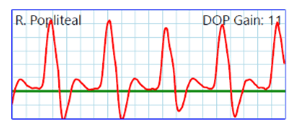
- If you are unsure of what vessel you are showing, you can “drop a dirty Dop;” meaning, you can listen to the spectral waveform without getting angles and settings right. This will help distinguish between vein and artery and internal carotid artery (ICA) and eternal carotid artery (ECA).